Source Cocoa Bean Peeler for Farms, Factories, and Shops
Compare 30 verified cocoa bean peeler units from Chinese manufacturers. Buyers can evaluate models like Tz-600 and JW-CP200 based on capacity, voltage, and automatic grade to find the right equipment for farm, food factory, or coffee shop applications; compare the available evidence and request quotations based on your requirements.
Key considerations
Products List


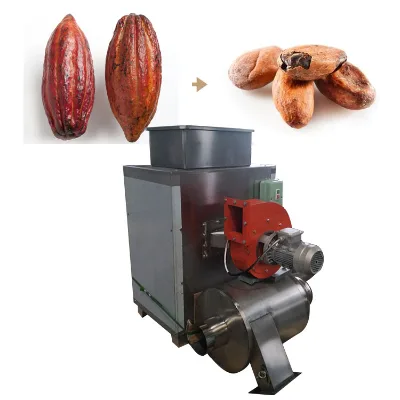
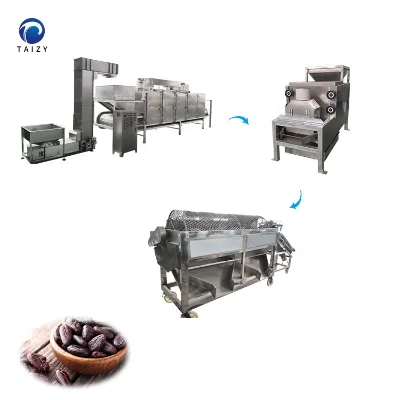
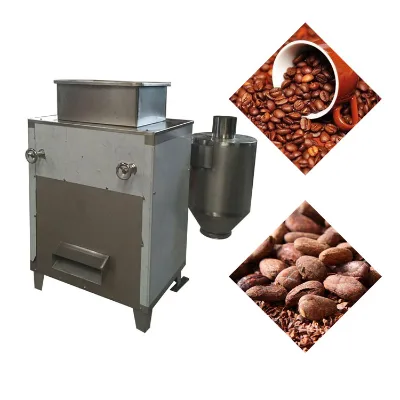


Comprehensive Sourcing Guide
Cocoa Bean Peeler Sourcing Guide
Buyers evaluating cocoa bean peelers must first distinguish between models designed for specific bean types versus those with broader agricultural applications. The observed market listings indicate distinct units tailored for cocoa and coffee beans, while other entries suggest compatibility with starch, wheat, and various grains. This variation requires careful alignment of the machine's intended treating product with your specific raw material profile to ensure operational efficiency.
Procurement decisions should also account for the observed capacity ranges, which span from 100kg/h to 700kg/h depending on the specific model configuration. A facility processing 500kg/h requires a different mechanical setup than one operating at 200kg/h, making capacity verification a critical first step before engaging with suppliers. Misalignment in throughput expectations can lead to significant bottlenecks or underutilized capital investment in the production line.
Product Scope and Observed Listing Signals
The product scope for cocoa bean peelers includes both fully automatic and automatic grade machines, with vertical structures being a common design feature. Listings frequently highlight high-efficiency peeling functions specifically for cocoa and coffee beans, though some models are marketed for general grain processing like millet or sorghum. Buyers must verify that the specific unit's function matches the primary crop to avoid processing inefficiencies or damage to the bean integrity during the peeling stage.
Observed listing signals reveal a diverse range of power sources, predominantly electric, with power ratings varying significantly from 1.85kw to 30kw. The physical dimensions also fluctuate, with some units measuring 1900x850x1350mm while others are listed as 1833x680x1791mm or 600x550x1100mm. These dimensional and power variances necessitate a thorough review of the factory floor layout and electrical infrastructure capabilities before finalizing a purchase order.
Technical Specifications to Verify
Technical verification must begin with the voltage requirements, as the observed data points to a standard 380V supply for many industrial units. Ensuring your facility's power grid can support this voltage is essential to prevent equipment failure or the need for costly transformer upgrades. Additionally, the automatic grade, whether fully automatic or standard automatic, dictates the level of labor intervention required, directly impacting long-term operational costs and staffing needs.
Capacity and processing speed are critical technical parameters that vary widely across the available models, ranging from 100kg/h to 2t/h in some listings. Buyers should cross-reference the stated capacity with the actual drying or processing method, such as the dry method or mild processing, to ensure the machine aligns with your production timeline. The net weight of the unit, observed at 150kg for some models, also influences shipping logistics and foundation requirements for stable operation.
Compliance and Safety Documentation
Compliance verification should focus on the presence of recognized certifications, with ISO standards appearing in the observed product data. While specific certification codes like ISOCE or ISOCustomized are mentioned, buyers must request valid, current certificates from the supplier to confirm the machine meets international safety and quality benchmarks. Relying on generic claims without physical documentation can expose the buyer to regulatory risks and potential safety hazards in the workplace.
Safety documentation must also address the electrical and mechanical safety features inherent in the machine's design. The electric power source and automatic operation imply specific safety protocols regarding emergency stops and guarding mechanisms. Buyers should request detailed safety manuals and risk assessment reports to ensure the equipment complies with local occupational health and safety regulations before installation and commissioning.
Cost Drivers and Commercial Terms
Cost drivers for cocoa bean peelers are heavily influenced by the level of automation and the specific capacity of the unit. Higher capacity models and fully automatic systems typically command a premium price, as seen in the observed range of 800 to 20,000 USD. Buyers should analyze the total cost of ownership, including energy consumption based on the 1.85kw to 30kw power ratings, rather than focusing solely on the initial purchase price.
Commercial terms often include a minimum order quantity of one set, which provides flexibility for small to medium-sized enterprises. However, the packaging requirements, such as fumigation-free wooden boxes or wooden cases, add to the overall logistics cost and must be factored into the budget. Buyers should clarify who bears the cost of specialized packaging and whether these terms are negotiable to optimize the total landed cost of the equipment.
Supplier Qualification and Quality Control
Supplier qualification requires verifying the origin of the machinery, with China being the primary source for the observed listings. Buyers should assess the supplier's manufacturing history and their ability to provide consistent quality control for the specific model, such as the Tz-600 or JW-CP200. A supplier's track record in exporting similar agricultural machinery is a strong indicator of their reliability and ability to meet international delivery standards.
Quality control processes should include a pre-shipment inspection to verify the material composition, such as carbon steel construction, and the structural integrity of the vertical design. Buyers must ensure that the machine's condition is listed as new and that all components, including the skin suction fan, are functioning correctly before shipment. Requesting third-party inspection reports can provide an additional layer of assurance regarding the machine's readiness for immediate deployment.
Long-Term Procurement Checks
Long-term procurement checks should focus on the availability of spare parts and the durability of the machine's core components. The use of carbon steel and the specific model designations like HT-KT3 suggest varying levels of wear resistance that will impact maintenance schedules. Buyers should establish a relationship with the supplier to ensure a steady supply of replacement parts, minimizing downtime during the machine's operational lifecycle.
Maintenance and support are critical for sustaining the high-efficiency performance observed in these peeling machines. Buyers should verify the supplier's commitment to after-sales service, including technical support for troubleshooting and potential upgrades. Establishing clear communication channels for maintenance queries ensures that the machine continues to operate at optimal capacity, protecting the initial investment and maintaining consistent production output over time.
FAQs
What is the capacity of the cocoa bean peeling machine?
The machine offers a capacity ranging from 200kg per hour up to 700kg per hour depending on the specific model selected. This variation allows buyers to choose a unit that matches their production volume needs efficiently.
Can the machine be customized for specific requirements?
Yes, customization is available for this equipment to meet unique operational needs. Buyers can request specific adjustments to ensure the machine integrates seamlessly into their existing production lines or processing workflows.
What is the voltage requirement for this peeling machine?
The machine operates on a standard voltage of 380V to ensure reliable performance in industrial settings. This electrical specification supports the automatic grade and fully automatic functions required for efficient bean processing operations.
How is the machine packaged for international shipping?
The unit is packed in a fumigation-free wooden box or wooden case to ensure safe transport. This packaging method protects the machine during transit while complying with international shipping standards for agricultural machinery exports.
What is the minimum order quantity for this product?
The minimum order quantity is one set, allowing buyers to purchase a single unit for testing or small-scale production. This low entry threshold makes the equipment accessible for various business sizes and operational scales.
Which materials are used to construct the machine?
The machine is constructed using carbon steel to ensure durability and resistance during heavy-duty processing. This material choice supports the vertical structure and high efficiency features required for peeling cocoa and coffee beans effectively.